Independent Sponsor Series: Bruce Lipian of StoneCreek Capital Discusses Investment Criteria, Benefits of Co-Sponsoring, and Advice for Emerging Independent Sponsors
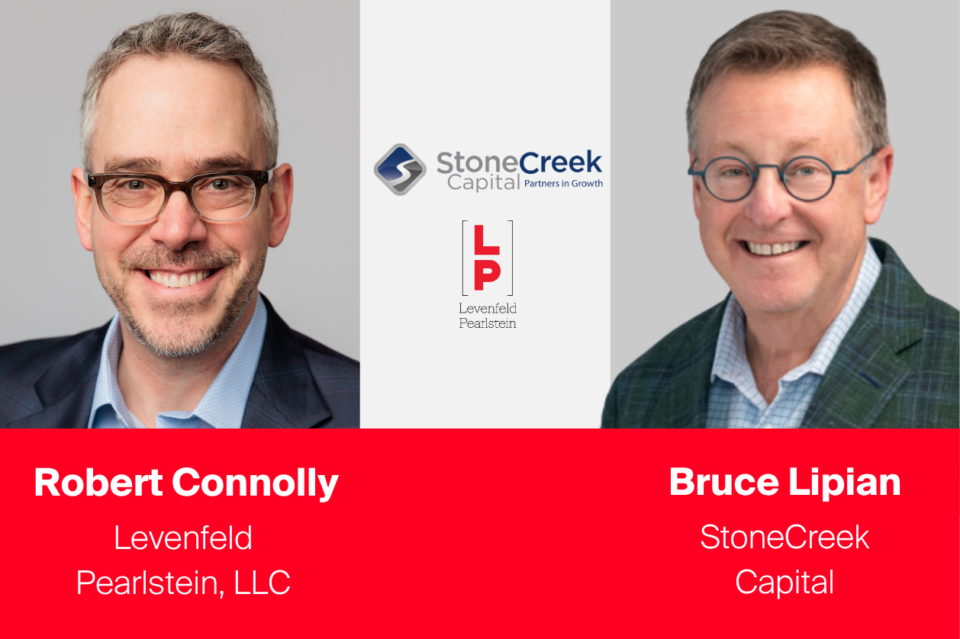
Robert Connolly, a partner in LP’s Corporate Practice Group and leader of LP’s Independent Sponsor team, is sharing a series of conversations with independent sponsors, capital providers, and other professionals. The goal is to help businesses, investors, and deal professionals better understand the changing independent sponsor landscape.
Here, he talks with Bruce Lipian, founding principal and Managing Director of StoneCreek Capital, an independent private equity sponsor with offices in Texas and California. Bruce shares StoneCreek’s investment approach, the benefits of co-sponsorship, and advice for new independent sponsors.
The following responses have been edited for brevity and clarity.
Can you tell us about StoneCreek Capital’s background and experience as an independent sponsor?
My partner, Drew Adams, and I have been partners for over 30 years. After I worked at Kelso & Co., a large private equity group, from 1988 to 1992, I teamed up with two former Kelso partners to start our own firm. In 1993, Drew – who had been a lender on one of the Kelso deals – joined us. Three years later, we raised a $60 million fund with HarbourVest as our lead investor. As Drew and I took on more leadership responsibilities and our two other partners stepped back, we asked them whether they would be receptive to formally granting us greater authority and changing the firm’s name. They were, and in 1998, we changed the name of our firm from The Gordon + Morris Group to StoneCreek Capital.
After that $60 million fund was fully invested and exited, Drew and I considered raising a fund of our own, but decided to complete a couple of deals on a standalone basis first. During that process, we realized that we really liked the standalone approach because it gave us more flexibility with our investment opportunities and we saw that we could use aspects of the approach to positively differentiate ourselves in the market.
It’s been an amazing journey to see how independent sponsors now have a level of relevance and legitimacy, and quite frankly, have become an integral part of the lower end of the private equity ecosystem. Private equity groups that previously showed little consideration for independent sponsors now have business development strategies targeted at building relationships with independent sponsors as a category. I don’t think we would have that level of interest if, as a group, we weren’t putting together deals that look as good or better to those groups than what they’re looking at, because there’s an added economic cost to them of doing one of our deals.
When a private equity group is at risk of their capital commitment expiring before they’ve deployed that capital, we are very relevant to them. They can deploy incremental capital without diverting substantial internal resources because an established independent sponsor typically understands how to play the GP role as well. Therefore, I see the relevance and the popularity of the independent sponsor as here to stay.
What is your investment strategy? Are there certain opportunities that match your criteria?
Our strategy follows the typical independent sponsor approach. Independent sponsors usually focus on the lower end of the middle market, working with businesses that have $2-10 million in EBITDA and an enterprise value between $20-100 million.
When it comes to criteria, every independent sponsor is different. Some are generalists, while others focus on areas where they have domain expertise. There are also parties who use the independent sponsor model as a way to do a few deals before raising their own fund.
StoneCreek is a generalist group with a diverse portfolio. We focus on supporting management buyouts and, more importantly, partnering with backable teams or leaders who may not have the funds or experience to do a deal on their own. As independent sponsors, we can fill that gap. These teams bring backability, credibility, and an operational strategy to increase value post-closing. We bring access to capital, a track record of consistently closing deals, and experience doing the necessary heavy lifting.
The beauty of this partnership is that we fulfill our role without being their boss. If they were to do it on their own, first, they’d have an enormously steep learning curve, so any chance of closing within the exclusivity period would be slim. We can significantly increase the likelihood that the deal will get done. Second, if we can establish that partnership in a proprietary deal before the owner has hired a sell-side advisor, we have an opportunity to get exclusivity, which is one of the hardest things as an independent sponsor to accomplish. If you can do that by forming the right partnership with the right team, and you each bring value to the other, our process benefits everybody. If it’s a proprietary deal and more than one group wants to back it, we can also help find the best fit.
By understanding the model’s flexibility, you can uniquely position yourself as the preferred partner and highlight the benefits unavailable to a management team if they go directly to private equity and try to sign the deal on their own.
The benefits independent sponsors offer have enabled this sub-category of private equity to stay relevant. Looking ahead, I expect institutional capital and family offices to continue incorporating independent sponsors into their investment sourcing strategies because the model meets important needs and creates new opportunities.
It’s also a model with a high mortality rate, especially for newcomers. I think we’ll see more emerging independent sponsors team up with experienced ones to increase the likelihood of getting their first deal done. If you haven’t completed a deal as an independent sponsor, you’re asking a seller to take a big leap of faith giving you exclusivity. However, once you have completed a deal, and you get asked ‘Have you closed any deals on a standalone basis?’ you’ll be able to say ‘Yes’ rather than ‘No’.
We’re seeing more co-sponsoring, where independent sponsors partner to augment each other’s strengths. Does StoneCreek’s experience and longevity make you a natural co-sponsor, especially for emerging sponsors? And if so, what are the circumstances in which you would partner with another independent sponsor? What does that typically look like?
We actively work as co-independent sponsors with established independent sponsors and emerging independent sponsors.
When we team up with an established independent sponsor with domain expertise, they fill a gap in our expertise and can also provide access to resources or other benefits. Alternatively, we have worked with established East Coast independent sponsors who have sourced opportunities on the West Coast or Southwest because we have offices in Newport Beach, California and in Fort Worth, Texas. Or we might team up with a solo independent sponsor who needs additional people to get the deal done.
The reason these types of scenarios have evolved is because there is a strong community of experienced independent sponsors who trust, respect, and support each other.
On the emerging independent sponsor side, we’re often approached when it’s too late, which is after the independent sponsor has already used up valuable ‘exclusivity’ time reaching out to numerous financing sources on their own. At that point, there’s a low likelihood we can change how those investors view the deal.
However, if we team up before the LOI or before the emerging independent sponsor has cast a wide net to investors, then we can be the first point of contact with the potential investor. It doesn’t mean that they’re going to invest, but there’s a predisposition to be responsive and take a serious look at the deal because we have a pre-established relationship. The benefits of our experience and reputation are lost if the emerging sponsor has already scoured the market. In addition, by teaming up with an experienced independent sponsor, the emerging independent sponsor has a better chance at (i) getting into the second round, (ii) signing an LOI, (iii) finding a capital provider, (iv) negotiating competitive economics with the capital partner, and (v) learning best practices (like how to incorporate language into the documentation that protects the independent sponsor).
What other advice do you have for new or emerging independent sponsors entering the market?
Before pursuing this path, make sure you have the credibility to be backable, which includes understanding the investor’s perspective and relevant experience. Private equity investors see many different investment opportunities, and their willingness to pay a premium to an independent sponsor is tied to how compelling the investment opportunity is and how much value-add an independent sponsor can bring beyond having a deal under LOI.
Second, make sure you’ve given yourself a long enough runway. The process of closing your first deal will take longer and cost more than you anticipate and you will probably have to look at more deals than you expected.
Third, give yourself enough time during exclusivity to prepare a strong package. Your advocate representing the private equity group is not the decision maker. That advocate reports to the investment committee, whose job is to find reasons not to do the deal. I believe you will have far greater success securing capital if your investment memorandum looks more like an approval memo than a CIM and includes the key risks and mitigating factors.
Emerging independent sponsors should also be careful not to be too aggressive ‘winning the bid’ in a competitive process if that’s the only thing that distinguishes them. Unless you have a compelling investment thesis that justifies your valuation, you won’t be embraced by capital sources if you put the highest price on the table to win the deal; they can do that. You also may create personal financial risk for yourself if you incur deal-related costs and the deal does not close because you weren’t able to find the acquisition capital.
Unless you have years of private equity, investment banking or transactional M&A legal experience and understand the terms that meet the needs of private equity groups, be cautious about signing an LOI before you line up your financing. I’ve seen several situations where an emerging independent sponsor did a great job of convincing the seller to go with them, but they agreed to terms that made it impossible for somebody else to come in. For example, if there is a seller note, make sure that it doesn’t entitle the seller to principal amortization over the next few years because the lender providing the acquisition debt won’t allow the seller, who’s already put millions of dollars in their pocket, to put more money in their pocket before the lender is repaid. That is a non-starter.
Finally, do not agree to a 30-day period to find capital—it is unlikely to be enough time. You might get lucky, but you should spend the first weeks preparing your package. Even if you get an extension, the pressure to find a capital provider adds stress you do not need. Be careful not to agree to things just to please others, or you may set expectations you cannot meet.
Is there a success story from StoneCreek’s portfolio that you can share?
One deal stands out as an example of how important it is to understand your value and use it to your advantage. Several years ago, we partnered with an executive who led one of two divisions at a company that was recently purchased by a private equity group that only wanted the other division. The group’s investment thesis was to hire an investment banker to sell the executive’s division and use the money to pay down debt. That division was very profitable and had over 50% market share, but it operated like an annuity – its financial results were basically the same each year. Because of this, the owners did not see an opportunity to grow its value
That process ultimately resulted in a busted deal because the highest offer they received was below their minimum threshold. When the investment bank took the division off the market, the executive wanted to buy it but wasn’t taken seriously as a credible buyer. Fortunately, somebody referred him to us. We teamed up, and in partnership with the executive, signed an LOI and purchased the division with the equity backing from a family office and a recognized private equity group.
We not only got a broken deal done, but our investors allocated a sizable amount of capital for add-on acquisitions. We like this example because it shows the value an independent sponsor can bring.
For more information on Bruce Lipian, visit his bio. For more information on StoneCreek Capital, visit their website.
To read other articles in this series, please see here: Insights | LP (lplegal.com)
Interested in participating in a future interview series? Please contact Robert Connolly.